Your furnace flashes an error code and you have no idea what it means. Before scheduling a repair visit, it helps to know what your unit is actually telling you. Many error codes point to simple fixes a homeowner can handle, while others signal something that needs a licensed tech right away. This guide explains how to read those codes, what the most common ones mean, and when a problem is beyond a DIY fix. McQuillan Home Services LLC, based in St. Paul, MN, runs furnace diagnostics across the Twin Cities through every heating season.
Your Furnace Is Trying to Tell You Something
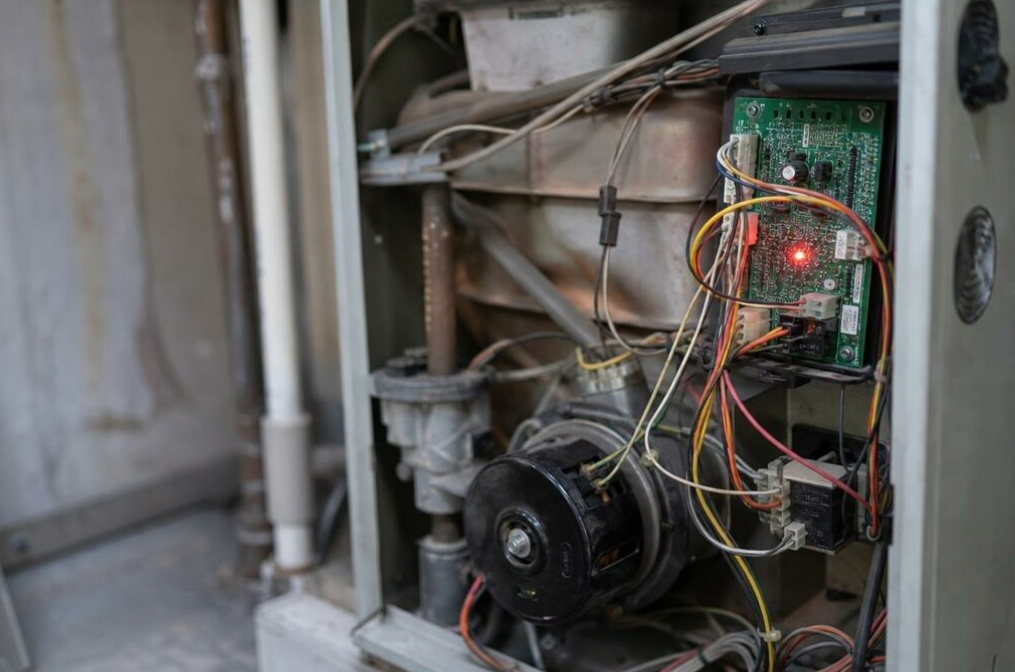
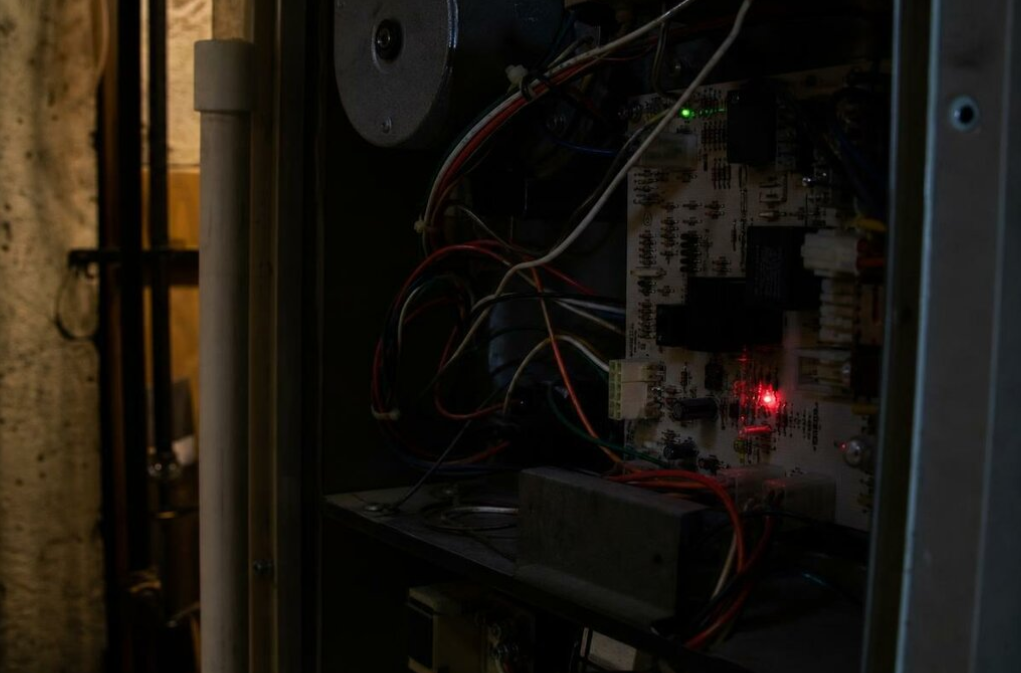
That blinking light on your furnace control board is a message, not a malfunction. Most gas furnaces built after 1990 use an onboard microprocessor that stores fault codes and communicates them through LED blink sequences. Each pattern maps to a specific problem, ignition failure, pressure switch fault, or limit switch lockout. Learning to read furnace blinking light codes saves time and helps you describe the problem accurately before anyone arrives.
Find the Diagnostic Window and Read the Code
Most modern furnaces broadcast fault information as a blinking LED on the control board. No tools are required beyond a flashlight.
Locating the Sight Glass and LED
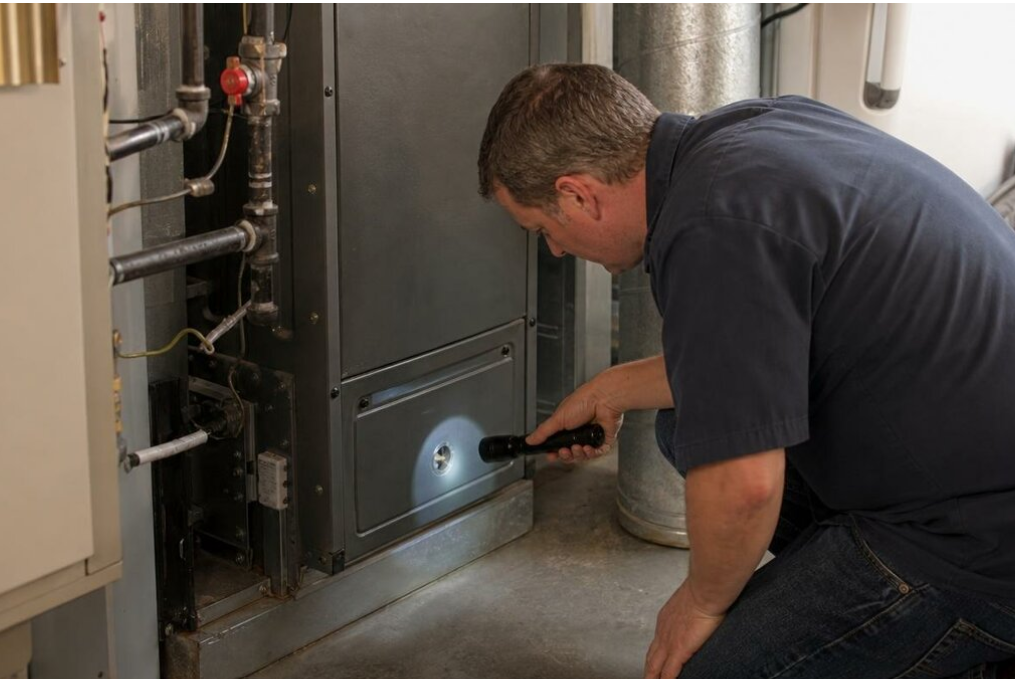
The sight glass is a small, clear or amber-tinted window on the lower front panel. The control board LED is usually visible through it.
- Stand in front of the furnace.
- Look at the lower access panel for a small round or rectangular window.
- Shine a flashlight at it if the area is dim.
- Watch for a blinking LED light behind the glass.
How to Count the Flash Sequence
Furnace diagnostic codes use a two-part flash sequence: a short burst of rapid blinks, a brief pause, then a second burst. Both numbers together form the code, three blinks, pause, one blink equals a 3-1 code. Watch the full sequence at least twice before writing anything down.
- Watch the LED and count the first set of blinks.
- Wait through the short pause.
- Count the second set of blinks.
- Write down both numbers, for example: 3-1 or 4-2.
- Confirm by watching the sequence repeat one more time.
Some older units use a single-digit pattern. If you see only one repeating burst with no second group, record it as a single-digit code.
Finding the Decoder Sticker Inside Your Access Panel
A printed legend sticker on the inside face of the lower access panel lists every fault code and a short description. These codes are not universal, a 3-3 on a Carrier unit means something different than a 3-3 on a Lennox. The sticker on your specific furnace is the only reliable decoder.
- Remove the lower access panel by pulling it straight out or lifting it off.
- Look at the inside face for a printed label.
- Match your two-number code to the list.
- Read the fault description carefully.
Common codes St. Paul homeowners find include pressure switch faults (often a blocked condensate drain or cracked inducer hose), flame sensor faults from carbon buildup, limit switch lockouts from a clogged filter, and ignition lockout after three failed trials. A dirty filter is the single most common cause of limit switch faults. Replacing it first can restore heat before needing furnace repair and diagnostics provided by McQuillan Home Services LLC.
When a Fault Code Signals Repair vs. Replacement
Most codes point to a single fixable problem, and repair is the right call. But recurring fault patterns on older units can signal the furnace is nearing end of life. Use the 50 percent rule: if the repair estimate exceeds half the installed cost of a comparable new unit and the furnace is 15 years or older, replacement is usually the smarter choice.
The 50 Percent Rule for Older Furnaces
ENERGY STAR recommends replacing heating equipment older than 15 years. Furnaces from 15, 20 years ago often run at 80 percent AFUE or lower, while a modern condensing furnace reaches 95, 98 percent AFUE. Xcel Energy also offers rebates to Twin Cities homeowners who replace an older unit with a qualifying high-efficiency model.
Fault Codes That Often Point to End-of-Life Issues
- Repeated limit switch lockouts on a unit older than 15 years. A dirty filter can trigger this once; when it returns after the filter is clean, it may indicate a cracked or failing heat exchanger.
- Recurring ignition lockouts after flame sensor cleaning. If the code clears but returns within weeks, it can point to a weak hot surface igniter or failing gas valve.
- Pressure switch faults that return after the condensate drain is cleared. If the drain is clear and the code keeps coming back, the inducer motor bearing may be failing.
A cracked heat exchanger is a safety issue, carbon monoxide can enter the living space. If a technician diagnoses this, the furnace should not continue running until the problem is resolved.
What to Expect When the Conversation Shifts to Replacement
If a diagnostic visit leads to a replacement recommendation, St. Paul homeowners should confirm their contractor pulls a City of St. Paul mechanical permit. Minnesota’s Department of Labor and Industry requires furnace installations to be permitted and inspected. McQuillan Home Services LLC covers both repair and full installation, so the same technician who identifies the fault can walk through replacement options on the same visit.
Frequently Asked Questions
Can I Reset My Furnace to Clear a Fault Code Without Fixing the Underlying Problem?
Resetting will temporarily clear the code, but the issue will almost certainly return. Note the code before resetting so a technician has a starting point for diagnosis.
Will My Furnace Fault Codes Look the Same on Every Brand and Model?
No. Fault code systems vary significantly between manufacturers and even between product lines from the same brand. Always reference the decoder sticker inside your specific access panel rather than a generic online list.
How Long Does a Typical Furnace Diagnostic Service Call Take?
Most diagnostic visits take 45, 90 minutes, depending on how quickly the fault can be reproduced and whether multiple components need inspection. McQuillan Home Services LLC carries commonly needed components on service vehicles to resolve many repairs in a single trip.
Is It Safe to Run My Furnace While a Fault Code Is Active?
It depends on the code. Pressure switch or ignition failure codes are generally lower risk, while codes tied to heat exchanger cracks or carbon monoxide risks should prompt an immediate shutdown. When in doubt, turn the system off and call a technician.
What Should I Tell the Technician Before They Arrive?
Share the exact flash sequence, how long the furnace ran before faulting, and whether the issue is intermittent or constant. Also mention any recent changes, new filter, recent service work, or unusual sounds or smells. More detail allows technicians to move faster from diagnosis to repair.
Do Fault Codes Appear During a Routine Annual Tune-Up?
Yes. A technician performing a tune-up will check the control board for stored or active fault codes even if the furnace appears to be running normally. Stored codes can reveal intermittent problems before they cause a full breakdown.
Can Cold Weather in the St. Paul Area Trigger False Fault Codes?
Extreme cold can indirectly cause fault codes by overworking pressure switches, freezing condensate drain lines on high-efficiency furnaces, or causing short-cycling. These are not truly false codes, the furnace is detecting a real condition. A technician can distinguish between weather-related fault triggers and genuine component failures during a diagnostic visit.
About McQuillan Home Services LLC
McQuillan Home Services LLC is a licensed HVAC, plumbing, and electrical company serving homeowners across the Twin Cities metro. Licensed technicians handle both diagnostic and installation work, covering the full range of residential furnace needs from fault code diagnosis through full system replacement. Every furnace installation is pulled under a City of St. Paul mechanical permit and inspected per Minnesota code.
Business Name: McQuillan Home Services LLC
Address: 1727 MN-36, St Paul, MN 55109
Phone Number: (651) 212-5828