Overview of Delta Flight DL275 Diversion to LAX
Delta Flight DL275, en route from Detroit Metropolitan Airport (DTW) to Tokyo Haneda Airport (HND), unexpectedly diverted to Los Angeles International Airport (LAX) on May 28, 2025. The long-haul Airbus A350-900 aircraft had been cruising over the Pacific when a mechanical issue was detected, forcing the pilots to change course and land safely in Los Angeles.
Passengers and crew landed without injury, and the remainder of the Tokyo service was cancelled. The incident sparked questions about aircraft reliability and in-flight safety decision-making for transpacific flights.
Flight Route Details: Origin, Destination & Aircraft Info

Delta Flight DL275 was scheduled to operate as a trans-Pacific service from Detroit Metropolitan Wayne County Airport (DTW) in Michigan, USA, to Tokyo Haneda Airport (HND) in Japan. This route typically connects the Midwest of the United States with Japan’s major international gateway, serving both business and leisure travelers.
The aircraft on this flight was an Airbus A350‑900, a modern long‑range wide‑body jet known for fuel efficiency and passenger comfort on extended flights. The specific aircraft involved carried passengers over 6,000 miles of planned route before the diversion decision was made.
Operated by Delta Air Lines, this daily service is part of the airline’s global network. The A350‑900 is powered by Rolls‑Royce Trent XWB engines, which are engineered for reliability on routes over remote areas such as the North Pacific.
Timeline: When and Where DL275 Turned Back
Shortly after departure from Detroit, Flight DL275 climbed to cruise altitude over the North Pacific. Several hours into the journey, while flying at high altitude, the flight crew received alerts indicating a technical problem with one of the aircraft’s systems.
Rather than continue into remote oceanic airspace, the pilots chose to divert. The aircraft turned away from its Pacific track and headed south toward Los Angeles International Airport (LAX), a major diversion option with full support services, and landed safely later that day.
What Caused Delta Flight DL275 to Divert?
The diversion stemmed from a technical issue involving the aircraft’s engine anti‑ice system, which is designed to prevent ice buildup in critical engine areas during flight. This system is especially important in cold, high‑altitude conditions common over the North Pacific.
According to reports, the flight crew identified malfunction alerts related to the anti‑ice system of one of the Rolls‑Royce Trent XWB engines powering the A350. While the aircraft could continue flying without the system, regulations for extended oceanic flights require operational ice protection on both engines. For safety and compliance, the crew elected to divert to the nearest suitable airport with maintenance capabilities.
Engine Anti‑Ice System Issue Explained in Simple Terms
What the Anti‑Ice System Does
The engine anti‑ice system prevents ice from forming on engine parts during flight, especially in cold air where moisture can freeze. Ice buildup can affect engine performance and safety, so the system uses heat to stop ice from forming.
Why It Matters on Long Flights
On trans‑Pacific flights like DL275’s, planes fly far from land for many hours. Rules say both engines must have ice protection working before crossing large oceans, because nearby airports aren’t always available. If the protection stops working, pilots often turn back.
The Issue on DL275
Delta’s A350 experienced a fault signal from the anti‑ice system on one engine. While this didn’t mean the engine was failing completely, it meant the aircraft couldn’t meet safety rules for a long over‑water flight, so the crew diverted to LAX.
Why the Flight Diverted to LAX Instead of Other Airports
The flight was already well into its Pacific route when the problem occurred. Although there are closer airports geographically, such as Anchorage or Seattle, Los Angeles offers major airline support, spare parts, and maintenance crews trained for the Airbus A350.
LAX is also a Delta Air Lines hub, making it a logical choice operationally. Choosing LAX minimized additional delays for passengers and gave the airline full resources to address the technical issue safely, compared with smaller airports that lack necessary support.
Official Statement from Delta Air Lines
- Delta confirmed Flight DL275 diverted for safety reasons after a technical issue with a critical aircraft system, prioritizing passenger welfare.
- The aircraft landed safely at LAX and crew and passengers disembarked without injury.
- The remainder of the flight to Tokyo was cancelled, and impacted travelers were rebooked on alternative flights.
- Maintenance teams at LAX inspected the aircraft and performed necessary checks before restoring service.
- Delta reiterated that safety protocols guided the decision, in line with industry regulations for long‑range operations.
Passenger Experiences and Onboard Announcements

Passengers onboard DL275 reported that the flight was smooth at first but tension rose after an announcement about a “technical issue” requiring diversion. Flight attendants and the captain provided periodic updates, keeping travelers informed and calm. Many passengers said the crew’s clear communication helped reduce anxiety during the unexpected reroute.
Once the decision to divert was made, cabin service shifted to preparing for landing. Travelers noted that while the unscheduled stop disrupted their plans, the landing in Los Angeles was smooth and orderly, and ground staff worked quickly to assist with rebooking onward flights.
After landing, some passengers expressed frustration over the delay and changes, but most acknowledged that safety was the priority. Many shared stories on social media about the long hours, hotel accommodations, and new flight arrangements provided by Delta.
Was There an Emergency? Safety Procedures Explained
Although there were no injuries or visible smoke/fire on board, DL275 was treated as a precautionary emergency due to a serious engine anti‑ice system fault detected mid‑flight. This type of technical malfunction meets airline criteria for declaring an emergency so flight crews can get priority clearance and full ground support when landing.
Pilots always follow strict protocols if even one critical aircraft system fails during long over‑water flights. They coordinate with airline operation centers and air traffic control to choose the safest diversion airport, in this case LAX, to protect passengers and crew.
How Long the Delay Lasted and Rebooking Process
DL275 spent about 18–19 hours on the ground at LAX after landing safely following the diversion. During this time, ground staff assisted passengers with hotel accommodations, meals, and onward travel options due to the overnight delay necessary for technical inspection and flight planning.
Delta began rebooking affected customers to alternate flights from LAX to their original destination or connecting points. Many passengers continued to Tokyo on later flights, while others adjusted plans through the airline’s customer service counters or mobile app.
Compensation, Refunds & Passenger Rights
Delta typically offers travel recovery support when passengers are involuntarily delayed or rerouted due to mechanical issues. This often includes meal vouchers, hotel accommodations, and ground transportation when an overnight stay is needed.
For flight disruptions not caused by weather, passengers might also be eligible for refunds or travel credits for the unused portion of their trip. Rules vary by fare type and ticket conditions, so contacting Delta’s customer service is recommended to understand specific entitlements.
In some regions beyond the U.S., passengers may have statutory rights to compensation under laws similar to EU261 if the delay or cancellation meets certain criteria. Review applicable regulations and file a claim through the airline’s support channels.
Aircraft Details: Airbus A350‑900 Safety Record
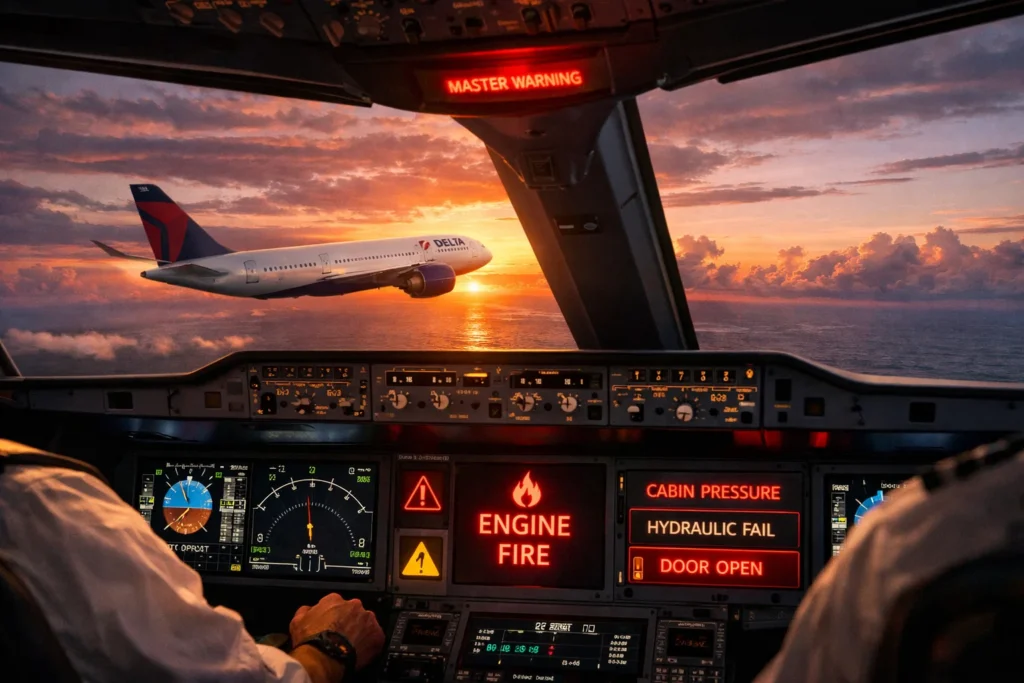
The Airbus A350‑900 is a modern long‑range wide‑body aircraft with a strong global safety record. It features advanced materials and systems designed for reliability, fuel efficiency, and passenger comfort on transpacific services like DL275.
While rare technical issues such as anti‑ice system alerts can occur, the A350’s redundant systems and established emergency procedures ensure such problems lead to safe diversions rather than accidents. Engineers regularly update maintenance protocols to maintain safety standards across airline fleets.
Similar Delta Flight Diversions in Recent Years
Delta has experienced other diversions due to technical issues or onboard events. For example, Flight DL295 in 2025 diverted mid‑air due to a mechanical alert and returned to its departure airport after flying for many hours before turning around.
There have also been unrelated diversions such as DL4 diverting to Dublin because of a passenger medical emergency en route from London to New York, demonstrating how safety protocols apply broadly across different scenarios.
How to Check DL275 Flight Status in Real Time
- Use the official airline app – Open the Delta Air Lines app and enter “DL275” to see live departure, arrival, delay, or cancellation updates directly from the airline.
- Visit airline website “My Trips” – Go to delta.com and enter your booking reference to view real‑time flight info and any schedule changes.
- Flight tracking sites – Tools like FlightRadar24 or FlightAware show live position, altitude, and route information by searching for the flight number.
- Airport arrival/departure boards – Check current airport status pages (e.g., DTW or HND) for up‑to‑the‑minute scheduled flights and gate details.
- Customer support alerts – Sign up for notifications via SMS or email from Delta to get automatic updates if the flight’s status changes.
Final Update: What Happened After Landing at LAX
After DL275 landed safely at Los Angeles International Airport (LAX), ground crews worked quickly to support passengers, offering hotel stays, meals, and assistance with rebooking onto later flights. The aircraft stayed at LAX for maintenance inspection and repairs before returning to service about 18–19 hours later. Most passengers continued to Tokyo or connecting cities the next day, while Delta communicated proactively through its app and gate agents to keep travelers informed about revised itineraries.
FAQs
Why was Delta Flight DL275 diverted to LAX instead of continuing to Tokyo?
Passengers want to know the safety and technical reasoning behind turning back to Los Angeles, one of the airline’s major hubs, instead of flying onward after the issue arose.
Is a diversion the same as an emergency landing?
Travelers commonly ask whether a diversion means something went seriously wrong on board, or if it’s a routine safety procedure handled by the pilots and airline.
What are the most common causes of flight diversions?
People often search for what can trigger a diversion—from weather and mechanical faults to medical emergencies and airspace restrictions.
Will I get compensation or refunds if my flight is diverted?
This is one of the top concerns, especially for international flights, as passengers want to know what rights they have for care, refunds, and travel credits after a diversion.
How can passengers stay informed during a diversion?
Travelers ask how to monitor flight status, receive updates from the airline, and what to do when an unscheduled landing disrupts plans.