The Seattle Seahawks vs Chicago Bears matchup in Week 17 of the 2024 NFL season delivered a rare kind of football game that fans do not often see in today’s high-scoring era. Played on December 26, 2024, the contest ended with a narrow 6–3 victory for the Seattle Seahawks in a defensive battle defined more by field position, discipline, and execution under pressure than explosive offensive highlights.
This game stood out not because of offensive fireworks but because of how both defenses controlled nearly every phase of play. Every possession mattered, every mistake was magnified, and one decisive interception ultimately separated the two teams. In this detailed breakdown, we explore the full Seahawks vs Chicago Bears player stats, box score performance, team efficiency, and the critical moments that shaped the outcome.
Game Overview: Seahawks Escape With a Defensive Win
The final score of 6–3 reflects just how tightly contested this matchup was. Neither team managed to find rhythm on offense for most of the game, and both defensive units consistently disrupted timing, pressured quarterbacks, and limited big plays.
Seattle ultimately secured the win thanks to a late-game interception thrown by Chicago that ended any hope of a comeback. While both teams struggled to move the ball consistently, Seattle showed slightly better execution in key moments, especially on third downs and in field position management.
The Seahawks’ ability to convert limited opportunities into points became the deciding factor. Meanwhile, the Bears were unable to turn possession time into scoring production despite controlling the ball slightly longer.
Team Stats Breakdown: Seahawks vs Bears Performance Comparison
When analyzing the Seahawks vs Chicago Bears player stats and box score, the most noticeable difference appears in efficiency rather than volume. Seattle produced more yards in fewer plays, while Chicago ran more plays but gained fewer yards per attempt.
Seattle recorded 265 total yards compared to Chicago’s 179. This difference highlights how the Seahawks maximized their offensive opportunities, even in a low-scoring environment. Seattle also averaged 5.2 yards per play, a strong figure considering the defensive pressure throughout the game. Chicago, on the other hand, managed just 3.1 yards per play, showing their struggles in generating consistent forward momentum.
Although Chicago ran 58 total plays compared to Seattle’s 51, they were unable to convert that additional volume into meaningful yardage or scoring drives. First downs were nearly even, with Seattle recording 12 and Chicago finishing with 11, but Seattle’s conversions came at more impactful moments.
Even time of possession slightly favored Chicago at 30:20 compared to Seattle’s 29:40. However, possession alone did not translate into scoring success, reinforcing the idea that efficiency mattered far more than control of the clock in this matchup.
Passing Game Analysis: Seattle’s Efficiency vs Chicago’s Struggles
The passing game played a major role in shaping the Seahawks vs Chicago Bears player stats, even though neither team produced large aerial numbers.
Seattle quarterback Geno Smith delivered a controlled and efficient performance, completing 14 of 23 passes for 143 yards. While these numbers may not appear dominant, his performance was defined by smart decision-making and turnover avoidance. He consistently chose short and intermediate throws, prioritizing ball security over risky deep passes. This approach helped Seattle maintain stability on offense even when drives stalled.
Smith’s ability to stay composed under pressure allowed Seattle to sustain drives long enough to reach scoring position, which ultimately resulted in their lone field goal. His leadership in managing the tempo of the offense was a critical factor in such a low-scoring contest.
In contrast, Chicago’s passing attack struggled significantly. The Bears quarterback completed just 6 of 16 passes for 76 yards, reflecting a difficult outing against Seattle’s defensive pressure. The Seahawks’ pass rush consistently disrupted timing, forcing quick throws and limiting downfield opportunities. Coverage downfield remained tight, and Chicago receivers had difficulty creating separation.
In addition to pressure, Chicago also faced issues with dropped passes and disrupted timing routes. As a result, their passing game never found rhythm, which placed additional pressure on the rushing attack to carry the offense.
Seattle’s receivers played a steady supporting role. DK Metcalf recorded 5 receptions for 61 yards, using his physical presence to gain yards after contact and secure key third-down conversions. Tyler Lockett contributed 4 catches for 47 yards, demonstrating his reliability in short-yardage situations and route precision in tight coverage.
Chicago’s receiving leader, Darnell Mooney, finished with 3 receptions for 34 yards. While he showed effort in gaining separation, the lack of consistent quarterback production limited his overall impact.
Rushing Performance: Charbonnet Leads Seattle’s Ground Control
The rushing battle in the Seahawks vs Chicago Bears matchup was one of the more balanced aspects of the game, although Seattle again held a slight edge in efficiency.
Zach Charbonnet emerged as the standout rusher of the game, carrying the ball 26 times for 122 yards. His performance was marked by patience, strength through contact, and an ability to consistently gain positive yardage even in tight defensive situations. Charbonnet’s running style helped Seattle maintain offensive balance, preventing Chicago from focusing entirely on pass defense.
Seattle’s offensive line also played a key role in opening running lanes and sustaining blocks at the point of attack. This allowed Charbonnet to find rhythm throughout the game, especially during extended drives that helped control tempo in the second half.
For Chicago, David Montgomery carried the rushing load with 20 attempts for 87 yards. While he demonstrated toughness and consistency, he frequently faced immediate contact in the backfield or short gains due to Seattle’s strong defensive front. The Bears were unable to break off explosive runs, which limited their ability to shift momentum through the ground game.
Overall, Seattle’s rushing attack proved more effective not just in yardage but in maintaining offensive stability during critical possessions.
Defensive Dominance: The True Story of the Game
The Seahawks vs Chicago Bears player stats tell a clear story of defensive dominance on both sides. This was not a game shaped by offensive mistakes alone but by sustained defensive pressure that influenced nearly every possession.
Seattle’s defense was particularly impactful in critical moments. The unit recorded multiple quarterback pressures and two sacks, consistently disrupting Chicago’s offensive rhythm. The secondary remained disciplined in coverage, limiting deep passing opportunities and forcing Chicago into short-yardage plays.
The most important defensive moment of the game came late in the fourth quarter when Seattle secured a game-changing interception. This turnover effectively ended Chicago’s final scoring chance and sealed the victory. It was a perfect example of situational awareness and defensive execution under pressure.
Chicago’s defense also performed well in stretches, particularly early in the game. They forced punts, limited explosive plays, and kept Seattle out of the end zone for most of the contest. However, their inability to create turnovers or capitalize on Seattle’s limited mistakes ultimately reduced their impact on the final result.
Both defenses demonstrated strong discipline, but Seattle’s ability to deliver a decisive turnover gave them the edge.
Special Teams Impact: Field Goals Define the Scoreboard
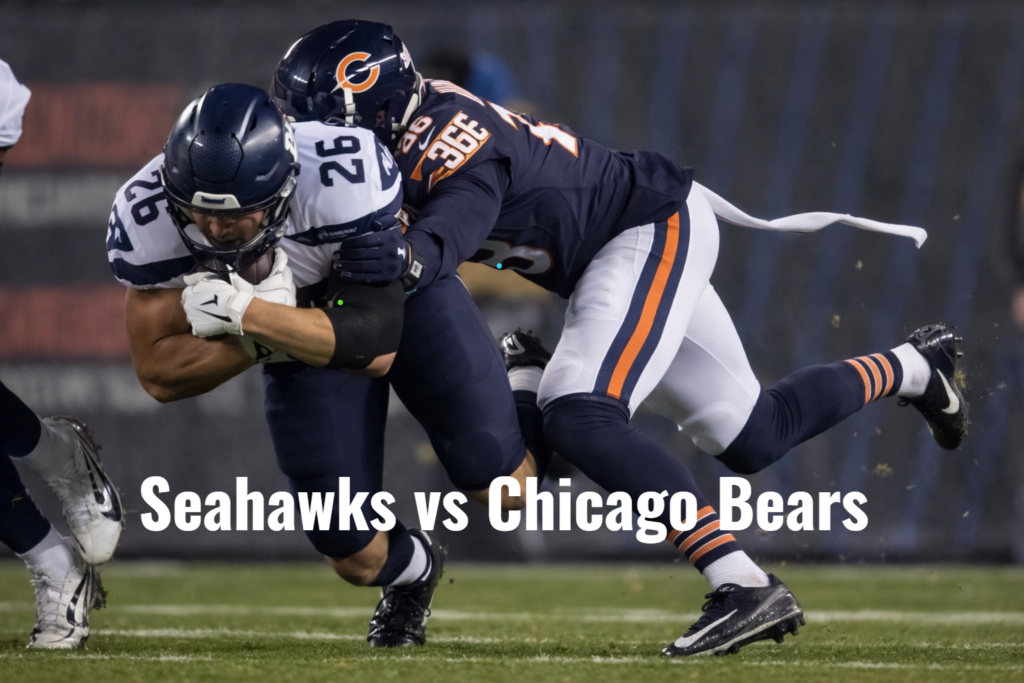
Special teams played a surprisingly significant role in shaping the final score of this game. With only two field goals recorded, every scoring opportunity mattered.
Seattle’s Jason Myers successfully converted a field goal that accounted for all six of the Seahawks’ points. The scoring drive was built on short passes and controlled rushing plays, demonstrating Seattle’s methodical approach in the red zone.
Chicago’s Cairo Santos also contributed a field goal, which accounted for all of the Bears’ scoring. Despite reaching scoring range multiple times, Chicago failed to convert drives into touchdowns, which proved costly in such a low-scoring matchup.
Punting also played an important role in field position battles. Both teams relied heavily on their punters to flip the field, and coverage units generally performed well in limiting return yardage. However, neither team gained a decisive advantage through special teams beyond the field goal conversions.
Efficiency Metrics: Why Seattle Won the Game
A deeper look into efficiency statistics from the Seahawks vs Chicago Bears box score reveals exactly why Seattle came out on top despite the narrow scoreline.
Seattle’s 5.2 yards per play compared to Chicago’s 3.1 is one of the most important indicators of offensive success. It reflects Seattle’s ability to generate steady gains even without explosive plays. Their drives were more structured and less reliant on high-risk attempts.
Third-down efficiency also played a role, with Seattle converting 3 of 8 attempts compared to Chicago’s 3 of 9. While the difference appears small, Seattle’s conversions came at more impactful moments, allowing them to extend drives when it mattered most.
Red zone performance was another key factor. Seattle managed to convert their opportunity into points, while Chicago failed to score touchdowns despite reaching scoring position multiple times. This inefficiency in critical situations ultimately cost the Bears the game.
Game Flow and Turning Points
The flow of the game remained slow and defensive from the opening kickoff. Early possessions leaned slightly toward Chicago in terms of control, but they failed to convert field position into meaningful points.
As the game progressed, Seattle gradually gained control through improved rushing consistency and more efficient passing. The turning point came in the fourth quarter when Chicago’s offensive drive ended in a crucial interception. That moment shifted momentum completely and eliminated any chance of a late comeback.
Seattle then managed the clock effectively in the final minutes, using short gains and conservative play-calling to secure the win.
Final Thoughts
The Seahawks vs Chicago Bears matchup was not a game defined by offensive brilliance but by defensive strength, discipline, and execution under pressure. Seattle’s ability to make the most of limited opportunities ultimately decided the outcome.
Geno Smith’s controlled passing, Zach Charbonnet’s consistent rushing performance, and the Seahawks’ late-game interception all combined to secure a narrow but important victory. Chicago, despite strong defensive effort and decent time of possession, failed to convert key moments into points.
This game serves as a reminder that in the NFL, efficiency often matters more than volume, and a single defensive play can determine the result of an entire contest.
FAQs
Who were the top performers in the Seahawks vs Chicago Bears game?
Geno Smith led Seattle’s passing attack with 143 yards, while Zach Charbonnet delivered the strongest rushing performance with 122 yards. DK Metcalf and Tyler Lockett were key contributors in the passing game. For Chicago, David Montgomery led the rushing effort, and Darnell Mooney was the top receiver.
What was the final score of the Seahawks vs Bears game?
The Seattle Seahawks defeated the Chicago Bears 6–3 in a defensive battle played on December 26, 2024.
Which team had better overall stats?
Seattle had better offensive efficiency, gaining 265 total yards compared to Chicago’s 179. They also averaged more yards per play and performed better in critical third-down situations.
What was the biggest turning point in the game?
The most important moment was a late interception thrown by Chicago, which ended their final scoring opportunity and secured the win for Seattle.
Why was the game so low scoring?
Both defenses dominated throughout the game, limiting big plays and forcing short drives. Combined with red zone struggles from both teams, scoring opportunities were rare and difficult to convert.