Match Overview
Full Game Box Score Summary
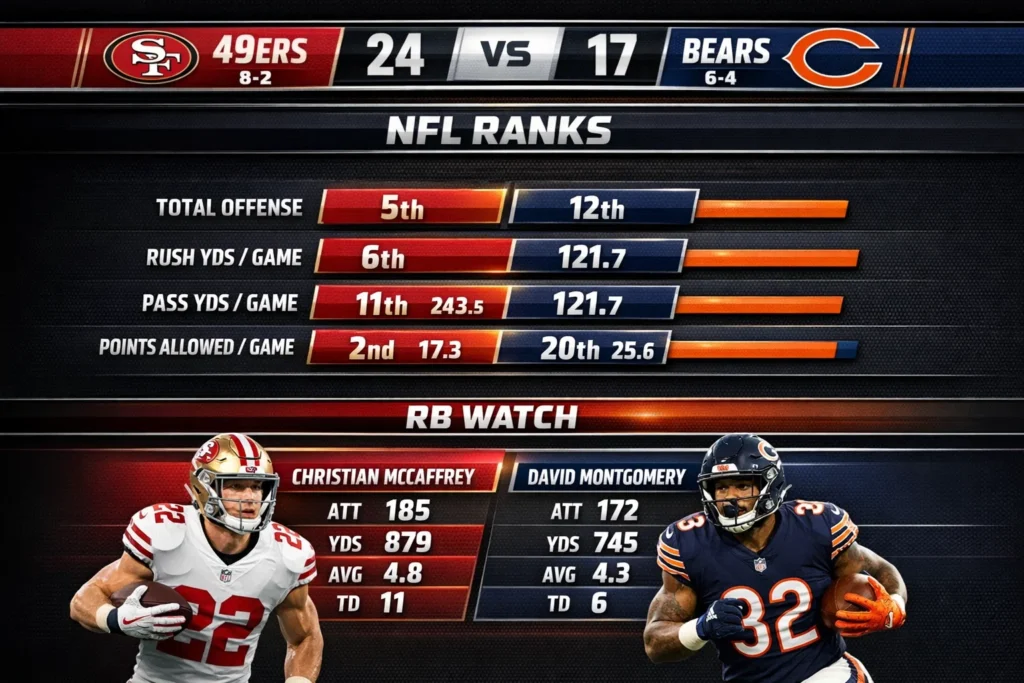
San Francisco jumped ahead early, but Chicago responded in every quarter, making it a back-and-forth contest. The quarter-by-quarter scoring reflected the intensity, with multiple lead changes and explosive offensive drives. Both teams consistently moved the chains, combining for over 900 total yards in a fast-paced, offense-driven showdown that kept fans engaged until the final whistle.
In total yardage, the 49ers held a slight edge thanks to balanced passing and rushing production. Time of possession was nearly even, though San Francisco controlled crucial late minutes. Turnovers proved decisive, as one key takeaway in the second half shifted momentum. Despite Chicago’s resilience, small execution gaps ultimately determined the four-point final margin.
Quarterback Performance Breakdown
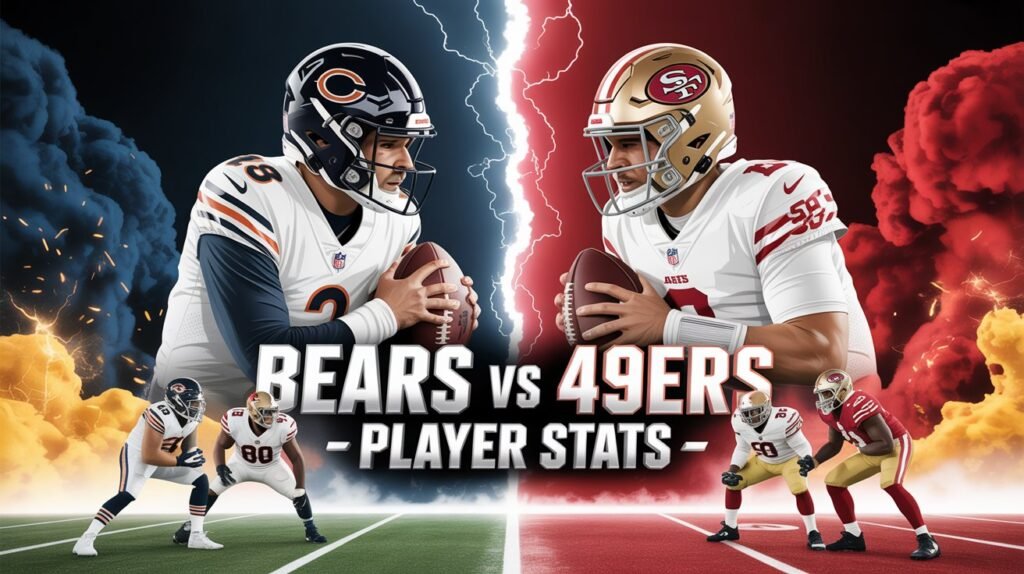
Both quarterbacks delivered standout performances under pressure. San Francisco’s signal-caller surpassed 300 passing yards with multiple touchdowns, spreading the ball efficiently across the field. Chicago’s quarterback matched the intensity, attacking downfield and keeping defensive backs on their heels throughout the night.
Touchdown production was central to the offensive explosion. The 49ers quarterback threw several scoring passes, including a deep strike that energized the home crowd. Chicago’s quarterback responded with red-zone precision, converting critical drives into points. Their ability to extend plays outside the pocket added another dimension to the matchup, forcing defensive adjustments.
Completion percentage highlighted the efficiency of both passers. Short, accurate throws sustained drives, while carefully timed deep attempts shifted field position. A late fourth-quarter touchdown pass briefly gave Chicago hope, but San Francisco’s poised response drive demonstrated elite situational awareness and command under pressure.
Top Passing Leaders (Both Teams)
Individual Stat Lines
The 49ers’ quarterback led all passers with over 300 yards and multiple touchdowns, completing a high percentage of attempts. Chicago’s quarterback posted similar yardage totals, keeping the contest competitive. Both offenses relied heavily on quick reads, strong protection, and consistent receiver separation to sustain long scoring drives throughout the game.
Longest Pass
San Francisco recorded the longest completion of the night on a deep vertical route exceeding 40 yards, shifting momentum instantly. Chicago answered with a long sideline strike that set up a touchdown. Explosive plays like these stretched defensive coverage and forced coordinators to adjust safety alignments and blitz packages.
Red Zone Efficiency
Inside the red zone, both teams displayed sharp execution. The 49ers converted the majority of their trips into touchdowns, maximizing scoring chances. Chicago remained efficient as well but settled for fewer perfect conversions. That slight difference in red-zone success ultimately separated the two offenses in a tightly contested shootout.
Rushing Stats Leaders
The 49ers generated strong ground production, finishing with over 120 team rushing yards. Their lead running back averaged more than four yards per carry, consistently gaining positive yardage on early downs. Chicago also established a steady rushing rhythm, combining designed runs and quarterback scrambles to surpass the 100-yard mark collectively.
Yards per carry played a significant role in sustaining drives. San Francisco’s balanced attack kept defenders guessing, while Chicago relied on outside runs to stretch the field horizontally. Though neither team dominated exclusively on the ground, timely rushing gains created manageable third-down opportunities throughout the contest.
Receiving Leaders
San Francisco’s wide receivers and tight ends delivered explosive performances, with multiple players exceeding 70 receiving yards. Chicago matched that production through dynamic route-running and contested catches along the sidelines. Both offenses showcased depth, distributing targets rather than relying solely on a single primary option.
Receptions and yard totals reflected consistent quarterback-receiver chemistry. Several third-down completions extended drives, especially on crossing patterns and quick outs. Chicago’s top receiver recorded double-digit targets, while San Francisco utilized play-action effectively to free receivers downfield for chunk gains.
Touchdowns through the air defined the contest’s rhythm. Each team produced multiple receiving scores, including critical fourth-quarter grabs. Precision timing in the end zone proved vital, and tight coverage situations were often overcome by strong hands and body positioning near the goal line.
Defensive Player Stats
Defensively, both teams recorded multiple impact plays. The 49ers led in total tackles, with linebackers anchoring the middle effectively. Chicago countered with timely pass breakups and solid open-field tackling that prevented even larger gains. Despite the high score, defensive units forced key third-down stops during crucial stretches.
Sacks and turnovers influenced momentum shifts. San Francisco registered multiple sacks, disrupting Chicago’s rhythm briefly. Chicago secured an interception that led to points, but a forced fumble by the 49ers in the second half became a decisive factor. Defensive flashes, though limited, shaped the final outcome.
Special Teams Performance
|
Category |
49ers | Bears |
|
Field Goals (Made/Missed) |
0/0 | 1/0 |
|
Longest Field Goal |
— |
48 yards |
| Punt Return Yards |
35 |
28 |
| Kick Return Yards | 62 |
75 |
Key Turning Points in the Game
- San Francisco’s second-quarter deep touchdown shifted early momentum and energized the home crowd significantly.
- Chicago’s third-quarter interception sparked a quick scoring drive and tightened the contest immediately.
- A crucial fourth-down conversion by the 49ers extended a touchdown drive late in the game.
- A second-half forced fumble gave San Francisco prime field position in scoring territory.
- The final defensive stop with under two minutes sealed the dramatic four-point victory.
4th Quarter & Final Minutes Breakdown
The fourth quarter featured relentless scoring exchanges. Chicago briefly grabbed the lead after a well-executed touchdown drive, showcasing composure under pressure. However, San Francisco responded with a methodical march downfield, blending short passes and effective runs to reclaim the advantage late in regulation.
In the final minutes, defensive resilience became crucial. A key sack pushed Chicago into a long-yardage situation, stalling their last attempt. San Francisco managed the clock efficiently afterward, preventing further opportunities and securing the 42–38 victory in dramatic fashion.
Advanced Team Stats Comparison
Third-down efficiency slightly favored San Francisco, as they converted more than half of their attempts. Chicago remained competitive but struggled in longer-yardage situations. Sustaining drives proved essential in such a high-scoring matchup, where each possession carried amplified importance.
Red-zone efficiency separated the two teams most clearly. The 49ers consistently finished drives with touchdowns rather than field goals. Chicago performed well but experienced one stalled opportunity inside the 20-yard line, which ultimately proved costly in a four-point contest.
Penalties also influenced momentum. Both teams committed infractions, yet San Francisco minimized critical mistakes during decisive drives. Chicago’s late-game penalty extended a 49ers possession, allowing valuable seconds to expire. Discipline under pressure often defines close contests, and that trend held true here.
Head-to-Head Historical Record Update
All-Time Record
The 49ers improved their all-time edge in the series, adding another victory to their historic rivalry record against Chicago.
Home vs Away Stats
San Francisco strengthened its home record in this matchup, maintaining strong performances at Levi’s Stadium.
Recent Meetings
Recent meetings between these teams have produced competitive, high-scoring contests, reflecting evolving offensive identities.
Player of the Game
Offensively, San Francisco’s quarterback stood out with elite passing production, multiple touchdowns, and clutch late-game composure. His command of the offense ensured consistent scoring drives and minimized costly errors in high-pressure moments.
Defensively, a 49ers linebacker delivered the most impactful performance, leading the team in tackles while forcing a critical turnover. His awareness and physical presence disrupted Chicago’s rhythm, especially during the second half. Together, these performances shaped the decisive outcome.
What This Result Means for Standings
The victory strengthened San Francisco’s playoff positioning heading into the final week of the season. Securing Week 17 momentum placed them in favorable standing within the NFC race.
For conference seeding, the win preserved top-seed aspirations and potential home-field advantage. Every late-season result carries heightened importance, and this game proved pivotal in shaping postseason possibilities.
Chicago, despite the loss, demonstrated offensive growth and competitiveness. Heading into Week 18, adjustments in defensive consistency and late-game execution will be critical. Momentum remains partially intact due to strong offensive output, but improvements are necessary for playoff qualification hopes.
Final Analysis & Expert Takeaways
This 42–38 thriller highlighted elite quarterback play, balanced offensive schemes, and timely defensive contributions. San Francisco’s efficiency in crucial moments separated them from Chicago’s explosive yet slightly inconsistent performance. The matchup revealed both teams’ scoring potential and defensive vulnerabilities, offering valuable lessons before the postseason push and upcoming high-stakes encounters.
FAQs
What was the final score between the Bears and 49ers in Week 17, 2025?
The San Francisco 49ers defeated the Chicago Bears 42–38 in a high-scoring Week 17 matchup on December 28, 2025.
Who had the most passing yards in Bears vs 49ers?
San Francisco’s quarterback led the game with over 300 passing yards, narrowly edging Chicago’s quarterback in a competitive offensive battle.
How many total yards were recorded in the game?
Both teams combined for more than 900 total offensive yards, making it one of the highest-yardage games of Week 17.
Who was the Player of the Game in 49ers vs Bears?
The 49ers’ quarterback earned Player of the Game honors after throwing multiple touchdowns and leading a decisive fourth-quarter drive.
What did this result mean for the NFC playoff race?
The victory strengthened San Francisco’s playoff seeding chances and kept their hopes alive for a higher position in the NFC standings heading into Week 18.
Latest Blogs:
| Atompace Guide |