Cevurı is a traditional Anatolian-style dish deeply rooted in the culinary heritage of Turkey, especially in rural regions where slow-cooking methods have been preserved for generations. It is known for its rich flavors, tender texture, and the way it reflects the lifestyle and culture of Anatolian communities. The dish is typically prepared using meat, vegetables, grains, and aromatic spices, all cooked slowly to develop deep and balanced flavors. Over time, Cevurı has evolved from a rural household meal into a dish appreciated in modern gastronomy as well. Today, it represents not only food but also cultural identity, hospitality, and tradition passed down through generations.
Origin and Historical Background
Cevurı traces its origins to the rural villages of Anatolia, where families relied on simple, locally available ingredients to create nourishing meals. Historically, it was prepared in large clay pots over wood-fired stoves, allowing the dish to cook slowly for hours. This method helped preserve nutrients while enhancing flavor, making it ideal for farming communities that needed energy-rich food.
Over time, Cevurı became more than just a daily meal. It was often prepared during gatherings, festivals, and family celebrations. The dish symbolized unity and sharing, as it was commonly cooked in large quantities and served to everyone at the table, reinforcing strong community bonds.
Cultural Importance in Anatolia
In Anatolian culture, Cevurı holds a meaningful place as a symbol of hospitality and tradition. It is commonly served when guests visit, reflecting the importance of generosity in Turkish culture. Families take pride in preparing it using traditional methods that have been passed down from elders.
The dish also plays a role in preserving cultural identity. In rural regions, cooking Cevurı is considered an art that connects younger generations with their heritage. It is not just about food preparation but about maintaining a lifestyle deeply connected to land, family, and tradition.
Ingredients and Traditional Composition
Cevurı is made using simple yet flavorful ingredients that reflect Anatolia’s agricultural richness. The main components usually include lamb, beef, or goat meat, combined with seasonal vegetables like tomatoes, peppers, onions, and sometimes legumes or grains. These ingredients create a balanced and hearty meal.
Spices such as black pepper, paprika, cumin, and salt are added to enhance the taste. Olive oil or animal fat is often used to enrich the texture. The combination of meat, vegetables, and spices creates a layered flavor profile that develops beautifully during slow cooking.
Cooking Method and Slow-Cooking Technique
The preparation of Cevurı is centered around slow cooking, which is essential for achieving its signature taste and texture. Traditionally, ingredients are placed in a heavy pot or clay vessel and cooked over low heat for several hours. This allows the meat to become tender and the flavors to blend naturally.
Modern cooking methods sometimes use ovens or pressure cookers, but traditionalists still prefer slow stovetop cooking. The long cooking process ensures that every ingredient absorbs the aroma of spices, creating a rich and comforting dish that is both filling and flavorful.
Regional Variations Across Turkey
Different regions of Turkey have their own variations of Cevurı, influenced by local ingredients and traditions. In southeastern Anatolia, the dish is often spicier and richer in meat content, reflecting the bold flavors of the region. In central Anatolia, simpler versions are more common, focusing on vegetables and grains.
Coastal regions may include olive oil and lighter ingredients, making the dish less heavy. These variations show how flexible Cevurı is, adapting to regional tastes while maintaining its core identity as a slow-cooked traditional meal.
Nutritional Value and Health Benefits
Cevurı is considered a nutritious meal due to its balanced combination of protein, fiber, and essential vitamins. The meat provides protein and energy, while vegetables contribute vitamins, minerals, and dietary fiber that support digestion and overall health.
Slow cooking also helps preserve nutrients that might be lost in faster cooking methods. When prepared with minimal oil and fresh ingredients, Cevurı can be a wholesome and healthy option that supports a balanced diet while still being flavorful and satisfying.
Cevurı in Modern Cuisine
In modern cuisine, Cevurı has gained attention among chefs who aim to reinvent traditional dishes. Many restaurants now present it with a contemporary twist, using refined plating techniques and updated ingredients while keeping its traditional essence intact.
Health-conscious variations have also emerged, using lean meats or plant-based alternatives. Despite these innovations, the core identity of Cevurı remains unchanged, as its slow-cooked foundation continues to define its authenticity and appeal in modern gastronomy.
Global Popularity and Culinary Influence
Cevurı is gradually gaining recognition beyond Turkey as international food lovers explore Anatolian cuisine. Food bloggers and chefs have introduced it in fusion menus, helping it reach a global audience interested in traditional and slow-cooked dishes.
Its influence can be seen in similar slow-cooked meat dishes across different cultures. This growing popularity highlights how traditional recipes can transcend borders and become part of global culinary appreciation while preserving their cultural roots.
Serving Style and Food Pairings
Cevurı is typically served hot, often in a deep serving dish to preserve its warmth and aroma. It is commonly accompanied by rice, flatbread, or bulgur, which complements its rich and hearty texture. Fresh salads or yogurt are also served alongside to balance the flavors.
In traditional settings, it is shared among family members at the center of the table, emphasizing togetherness. The serving style reflects its cultural importance as a communal dish meant to be enjoyed collectively rather than individually.
Conclusion
Cevurı stands as a powerful representation of Anatolian culinary heritage, combining tradition, culture, and flavor in a single dish. Its slow-cooking method, simple ingredients, and deep cultural roots make it more than just food—it is a reflection of history and community. As it continues to evolve in modern cuisine and gain international recognition, Cevurı remains a timeless symbol of comfort, tradition, and shared heritage that connects past and present through taste and tradition.
FAQs
What is Cevurı?
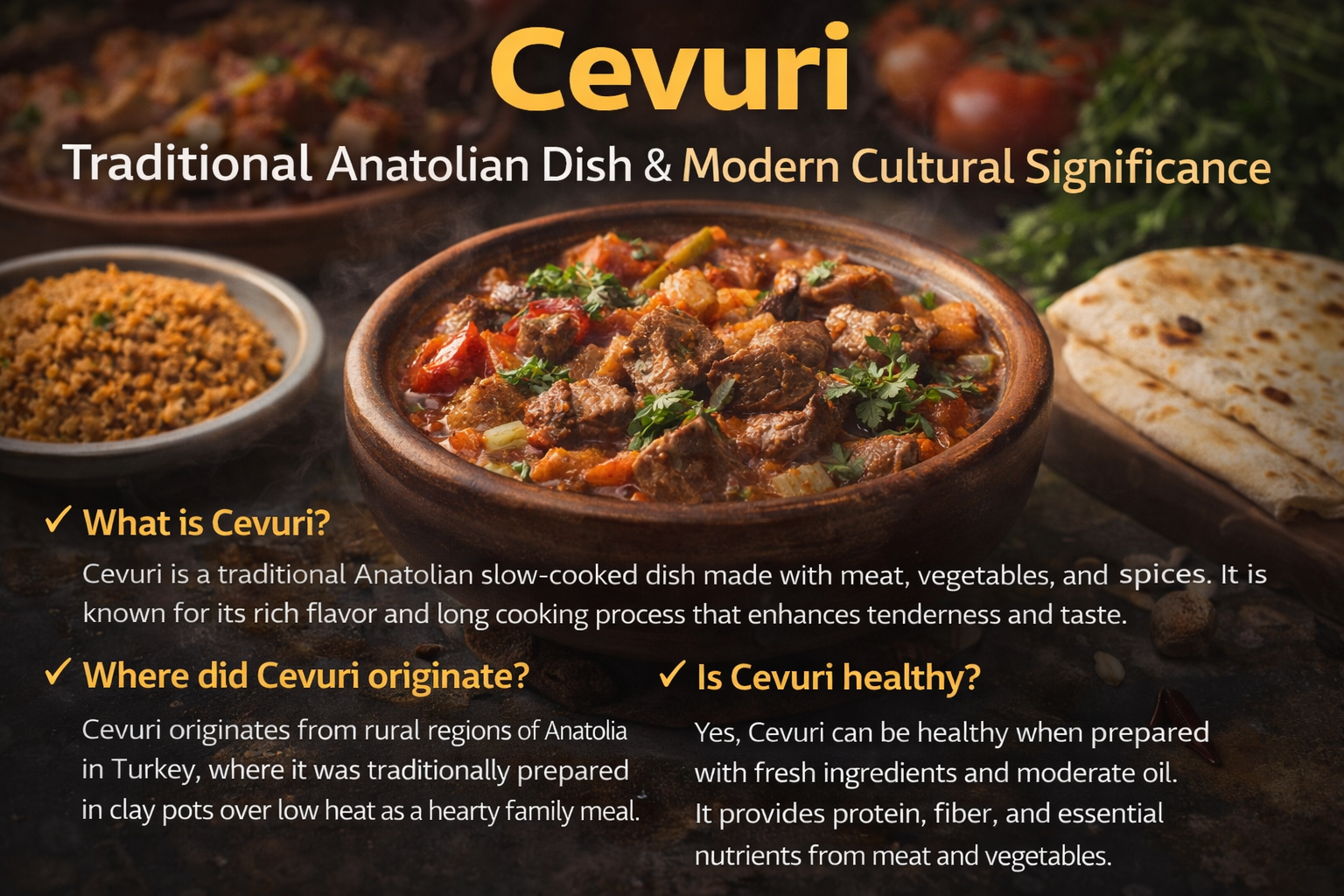
Cevurı is a traditional Anatolian slow-cooked dish made with meat, vegetables, and spices. It is known for its rich flavor and long cooking process that enhances tenderness and taste.
Where did Cevurı originate?
Cevurı originates from rural regions of Anatolia in Turkey, where it was traditionally prepared in clay pots over low heat as a hearty family meal.
What ingredients are used in Cevurı?
It usually includes lamb, beef, or goat meat along with vegetables like tomatoes, onions, peppers, and spices such as cumin, black pepper, and paprika.
Is Cevurı healthy?
Yes, Cevurı can be healthy when prepared with fresh ingredients and moderate oil. It provides protein, fiber, and essential nutrients from meat and vegetables.
How is Cevurı different from other Turkish dishes?
Cevurı is unique because of its slow-cooking method and deep cultural roots. Unlike faster dishes, it is cooked for hours to develop rich, layered flavors.