
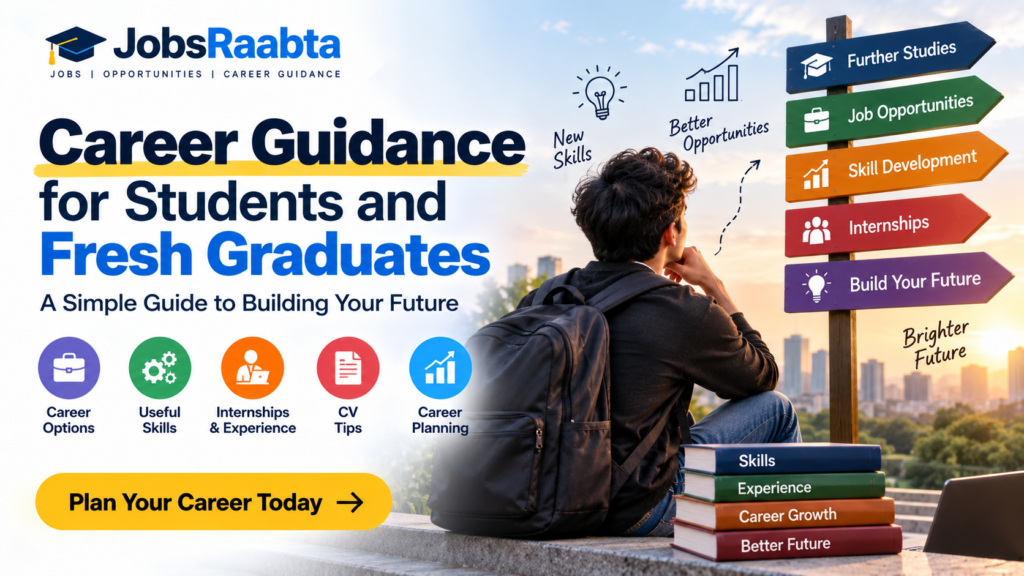
Choosing a career can be confusing, especially when you are a student or a fresh graduate. There are many fields to choose from, and sometimes it is difficult to understand which direction is right for you. You may have questions like: What career should I choose? Which skills should I learn? Should I look for a job or continue my studies? How can I gain experience when every job seems to require experience?
There is no single answer that works for everyone. However, career guidance for students and fresh graduates can help you understand your options and make more practical decisions about your future.
Also Check: How To Prepare For Job Interview
Career Guidance Starts With Knowing Yourself
Before choosing a career, spend some time understanding your own interests, abilities and goals.
Think about the subjects you enjoy, the type of work you find interesting and the skills you already have. Some people enjoy working with technology, while others prefer teaching, business, science, communication or creative work.
You should also consider your personality and preferred working style. Do you enjoy working with people? Do you prefer solving problems independently? Are you comfortable with numbers, writing, technology or practical work?
Knowing yourself can help you avoid choosing a career simply because other people are choosing it.
Career Guidance Helps You Explore Different Career Options
Students often know only a few common career paths related to their degree. In reality, one degree can lead to several different types of jobs.For example, a graduate may work in a private company, government organization, education sector, research, freelancing or business depending on their education and skills.
Take some time to explore different career options related to your field. Read job advertisements and look at the qualifications and skills employers are asking for.
Career Guidance Can Help You Choose the Right Skills
Your degree is important, but practical skills can also make a significant difference when you start looking for work.
Look at current job advertisements in your field and identify the skills that appear regularly.
These might include:
- Communication skills
- Microsoft Office
- Computer skills
- Data analysis
- Digital marketing
- Graphic design
- Programming
- Research skills
- Content writing
- Project management
Career Guidance Means Building Experience Early
One of the biggest challenges for fresh graduates is the lack of experience. The good news is that professional experience is not the only type of experience you can build.
Internships, university projects, volunteer work, freelance projects and part-time opportunities can all help you learn how a professional environment works. If you are still studying, don’t wait until graduation to start gaining practical experience. Even a short internship or small project can give you something useful to discuss during a job interview.
Career Guidance for Fresh Graduates: Start With Realistic Goals
After graduation, it is natural to want a good salary and an excellent position immediately. However, your first job may not be your dream job. Your first position can be an opportunity to learn workplace communication, understand professional responsibilities and develop practical skills. Instead of focusing only on the starting salary, consider what you can learn from the position and whether it can help you move toward your longer-term career goals.
Career Guidance Includes Improving Your CV
A good CV is an important part of your job search. Your CV should clearly present your education, skills, experience and relevant achievements. Avoid adding unnecessary information just to make the CV longer. If you are a fresh graduate, highlight internships, academic projects, certifications, relevant coursework and practical skills.
Career Guidance Requires Learning From Job Rejections
Job rejection can be disappointing, especially when you have spent a lot of time preparing an application. However, rejection does not automatically mean that you are not capable of building a successful career. Sometimes there are many applicants for a single position, or the organization may be looking for a very specific skill or level of experience..
Career Guidance Should Include Networking
Networking simply means building professional relationships with people in your field. You can connect with teachers, university seniors, colleagues, internship supervisors and professionals working in areas that interest you. You do not have to ask everyone for a job. Sometimes a simple conversation can help you learn about a career path, internship opportunity, skill or industry that you did not know much about before.
Career Guidance Means Continuing to Learn
The job market continues to change, and the skills employers need can change as well. This is why learning should not stop after graduation. You can use online courses, books, workshops, tutorials and practical projects to improve your knowledge.
Try to focus on useful learning rather than collecting certificates. A skill that you can actually demonstrate through a project can often be more valuable than simply having a certificate.
Career Guidance: Make a Plan for Your Next Step
You do not need to plan your entire life today. Start with the next step. For example, you might decide to improve one skill this month, complete an internship in the next few months, update your CV and apply for relevant jobs after graduation. Write down your goals and review them regularly. If your interests change, your career plan can change too.
Final Thoughts on Career Guidance
Career guidance for students and fresh graduates is not about finding one perfect career and following the same path forever. It is about understanding yourself, exploring opportunities and making informed choices. Start where you are, build useful skills, gain practical experience and keep improving your communication and professional knowledge. Your career may not develop exactly according to your original plan, and that is completely normal. What matters is that you continue learning and make thoughtful decisions about your next opportunity.